Locking a checked bag: TSA-recognised locks, luggage straps and tags
A lock on a checked bag joins the zip pulls together. It will not stop a security search, and in the US a TSA-recognised lock is the kind an officer may be able to open without cutting it.
On this page
A lock on a checked bag does one modest job: it joins the two zip pulls, so the bag takes a deliberate effort to open. It will not stop a security search, and in the US a TSA-recognised lock is the kind an officer may be able to open instead of cutting.
What "TSA recognised" means
At US airports, the Transportation Security Administration (TSA) screens checked bags for explosives and other dangerous items before they go on the plane. The TSA says most are screened without anyone opening them, but sometimes an officer has to look inside.
For that, the TSA holds universal master keys under agreements with two lock companies, Safe Skies and Travel Sentry. Locks made to work with those keys can be opened by an officer, so they may not have to be cut. Its own travel checklist puts it simply: if you are buying a luggage lock, look for one that is TSA recognised.
Two things the TSA is careful to add. It takes no position on how good these locks are as security. And it will remove one if it has to during an inspection.
In shops you will often see locks sold as "TSA-approved", which is not the TSA's own term. What tells you an officer can open one is the packaging: the TSA says it should indicate the lock can be opened by TSA officers, and the TSA's master keys come from Travel Sentry and Safe Skies.
Will the TSA cut my lock?
Only if it needs to get in and cannot open the lock another way. The TSA's travel tips set it out:
- If your bag is unlocked and an item sets off an alarm, the officer opens it and screens it.
- If it is locked and the officer cannot open it by other means, the lock may have to be cut.
- On soft-sided bags, the TSA says this does not damage the zips or zip pulls.
- The TSA is not liable for damage to locked bags that have to be opened for security.
- If your bag was opened, you will find a Notice of Baggage Inspection inside it.
The TSA also points out that security is not the only thing that breaks locks: airport conveyor belts can damage them too.
If something is lost or damaged during screening, the TSA says you can file a claim with it. If it happened in transport to the plane or to baggage claim, the claim goes to your airline.
About our lock
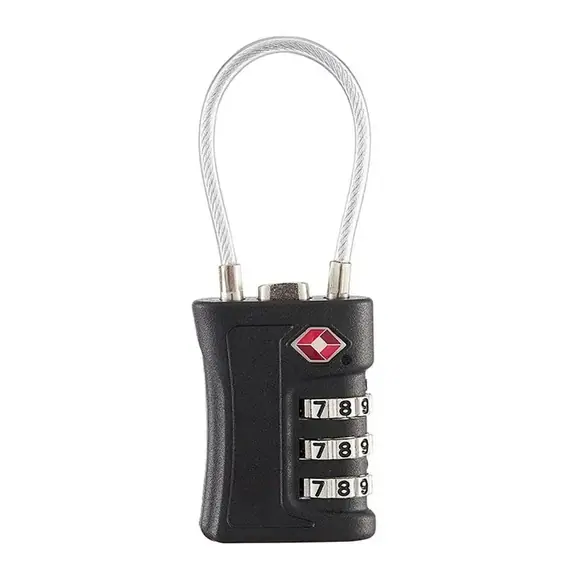
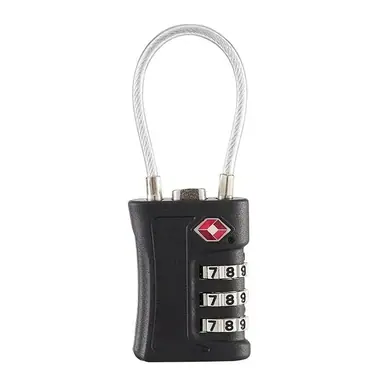
The TSA-Approved Luggage Lock with 3-Digit Combination is a light ABS plastic lock with a three-digit combination, so there is no key to lose, and it comes in black, yellow or orange, which helps a case stand out on the belt.
It is sold as TSA-approved. Its listing does not name Travel Sentry or Safe Skies, though. Until that is confirmed, look for a Travel Sentry or Safe Skies name on the packaging or the lock before you rely on it for a US flight.
Like any luggage lock, think of it as something that joins the zip pulls together.
Luggage straps: what they are for
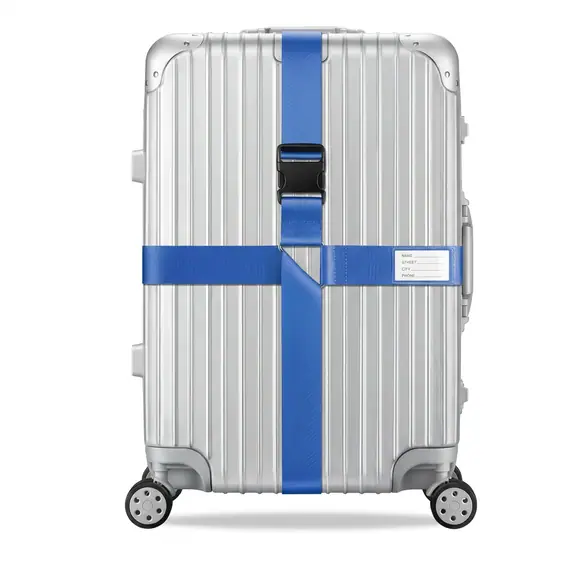
A strap goes all the way round the case, over the zip or the catches. Its main job is simple: if a zip splits or a catch pops, the strap helps hold the case shut. A bright one also makes your bag easier to spot on a belt full of black cases.
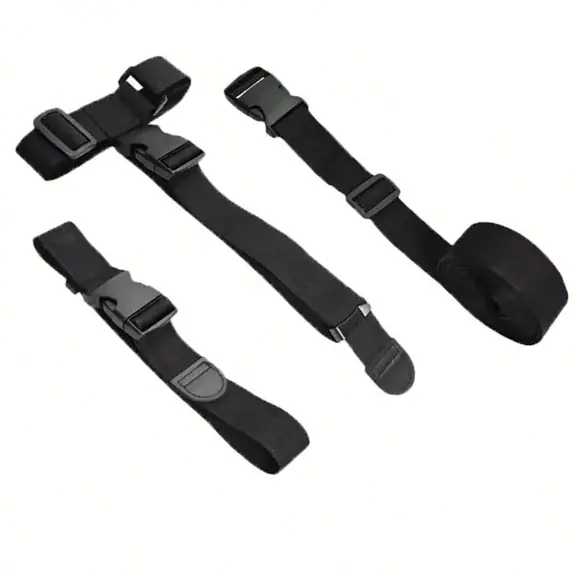
- The Heavy-Duty Adjustable Nylon Luggage Strap in Black is nylon webbing with a buckle and an adjustable length of up to 400 cm, and it is made to help stop a case opening by accident. It is black only, so it will not help you spot the bag.
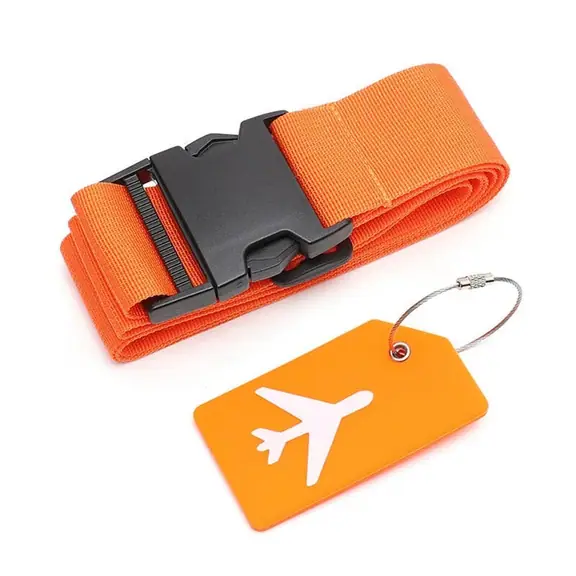
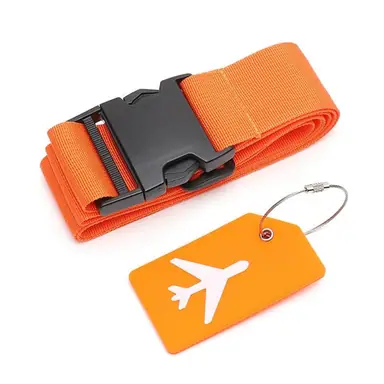
- The Nylon Luggage Strap and Matching ID Tag Set in 4 Colors is the one for spotting. It comes in orange, pink, green or blue, with a quick-release buckle and a matching ID tag with a PVC window. The strap adjusts from about 150 to 200 cm, so check that against an oversized case.
- The Adjustable Nylon Luggage Strap with Combination Lock is 200 cm long and 5 cm wide, with a built-in combination lock.
That built-in lock is not described as TSA recognised on its listing. On a flight screened by the TSA, treat it as a lock the officers may not be able to open: if they need to get into the case, they may have to cut it off. For US flights, a plain buckle strap with a TSA-recognised lock on the zip makes that less likely.
To choose a length, measure round your case the way the strap will go, around the widest part, and add a little for the buckle.
What to put on a luggage tag
A tag is for the moment a bag and its owner are separated, so it needs to reach you wherever you are. That means a name, a mobile number with the country code, and an email address you check while travelling. Whether to add a home address is your call.
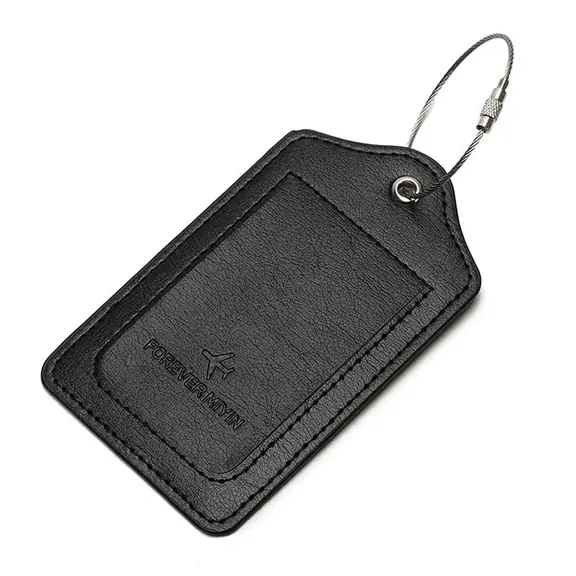
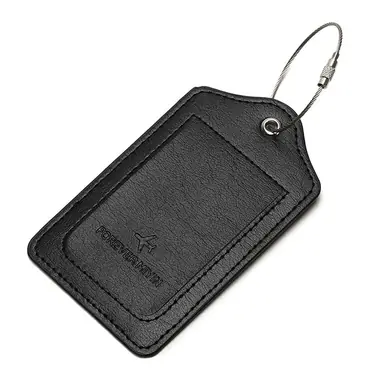
A privacy cover helps with that. The PU Leather Luggage Tag with Privacy Cover has a privacy cover over your details so they are not on show, and a wire loop that fixes it to the handle. It is 12.2 × 7.3 cm, in black or brown, and it is PU, not real leather, so it wipes clean with a damp cloth.
Put your details inside the bag too, in case the outside tag is torn off in handling. The TSA's checklist suggests taping a card with your name and contact information to your electronics, and the same idea works on the inside of the case.
Before you check a bag
- Any lock on it is a Travel Sentry or Safe Skies lock, if you are flying from or through a US airport
- Power banks and spare batteries are in your carry-on, not the checked bag (the TSA does not allow them in checked luggage)
- Any medicine you may need on the trip is in your carry-on (the TSA strongly recommends this)
- A strap goes round the case if the zip or catches are worn
- The outside tag has a name, a mobile number with country code and an email
- A second set of contact details is inside the bag
- You have a photo of the bag, in case you need to describe it at a baggage desk
Sources
About this guide. The rules, safety and health points follow the sources above. They are general information, not advice for your situation, and airlines can set stricter rules of their own, so check with yours before you fly. What we say about our own products comes from their product pages. We sell some of the things mentioned here.