How to sleep on a long-haul flight: pillows, footrests and moving about
Sleep on a plane is rarely good sleep, but it can be better than none. What helps most is timing, the right seat, a head that does not drop, and a plan for getting up.
On this page
Sleep on a plane is rarely good sleep. The seat is upright, the cabin is loud, and your head keeps dropping just as you drift off. But the CDC's Yellow Book, a guide written for health care providers, notes that losing sleep on the way can make jet lag worse, so a few hours of it are worth working for.
The things that help most are not complicated: sleeping at the right time, a seat that suits it, something to stop your head falling, and a plan for getting up, because sitting still for hours is a risk factor for blood clots.
Decide when to sleep before you board
On a flight across time zones, the best time to sleep is when it is night where you are going, not when the lights go down. The Yellow Book says to time meals, sleep and light exposure on the flight to the destination's time zone.
It also suggests starting before you leave. Shifting your sleep an hour later each day for two or three days before a westward trip, or an hour earlier before an eastward one, may shorten the time it takes to adjust. After you land, the CDC says staying awake through the local day builds the drive to sleep that night, so hold out until a normal local bedtime. The CDC says short naps of 20 to 30 minutes can help you stay alert through the local day, but longer daytime naps can make it harder to sleep that night.
Pick the seat for it
A window seat gives you a wall to lean on and nobody climbing over you to get out.
An aisle seat is worse for sleep and better for moving about. The CDC's Yellow Book notes that aisle seats are reported to lower the risk of blood clots compared with window and middle seats, probably because people in them can move around more freely. If you have any of the risk factors the NHS lists for deep vein thrombosis (DVT), such as being over 60, having had a clot before, being pregnant or having recently had surgery, the aisle may be the better call. Guidance summarised by the CDC recommends an aisle seat, frequent walks and calf exercises for travellers at increased risk on trips of more than six hours, though it rates that as a weak recommendation. If you are in that group, talk to your doctor before a long flight.
Stop your head dropping
If you have ever jolted awake as your head fell forward, that is the problem a travel pillow is meant to help with.
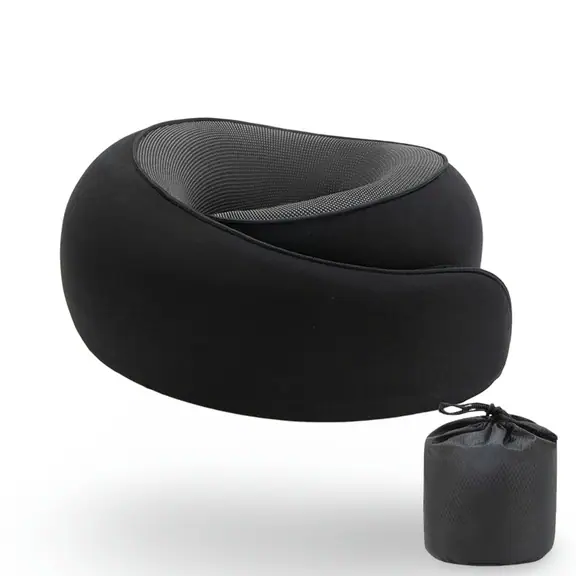
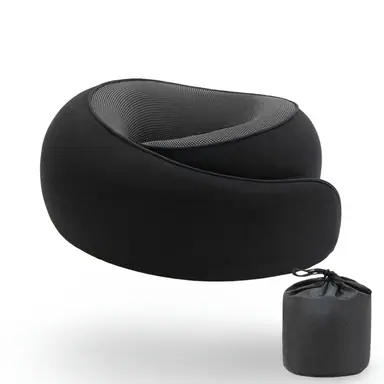
The U-Shaped Memory Foam Travel Pillow with Adjustable Fit has memory foam filling that shapes itself to your neck and a polyester and cotton cover, and its listing describes it as adjustable for personalised comfort. It is spot-clean only, with mild detergent, and should be left to air dry.
A few other small things help: an eye mask and earplugs of your own, loose clothes, and shoes you can slip off.
Footrests: what they do, and the airline rules
An inflatable footrest sits on the floor space in front of your seat and lifts your feet. The CDC's Yellow Book notes that plane seats are higher than car seats and cannot be adjusted for height, and that pressure from the seat edge behind the knee can make slow blood flow in the legs worse. It also notes that people shorter than about 1.6 m, or taller than about 1.9 m, were found to be at increased risk of clots. We cannot point you to evidence that a footrest lowers the risk of clots, so do not treat one as a replacement for getting up.
Before you pack one, check your airline's rules, because airlines set their own. Qantas, for example, says on its page for flying with children that inflatable cubes are the only comfort devices it currently approves. A cube has to be inflated by hand, have a quick-release valve (or another way to release air quickly) facing the aisle, and be used in Economy or Premium Economy, not in exit or bulkhead rows. On its widebody aircraft it can be used in window or middle seats, and on its narrowbody aircraft in window seats only. It has to be packed away whenever the seatbelt sign is on, and the cabin crew checks each one. That page is written for children and does not say whether an adult's footrest counts as a cube, so ask the airline. We have not checked other airlines' rules.
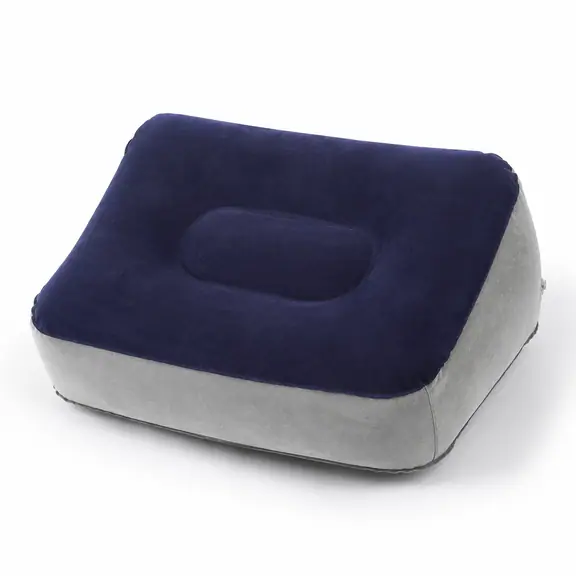
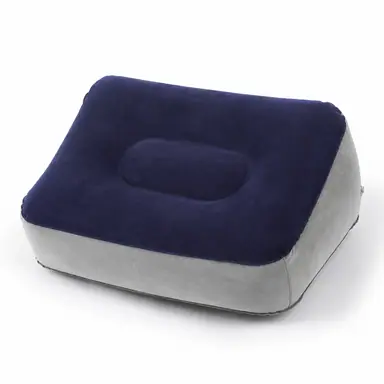
- The Inflatable PVC Travel Footrest Cushion in Blue or Gray works as a footrest or as a pillow, and it deflates and folds small for your bag. It needs inflating each time.
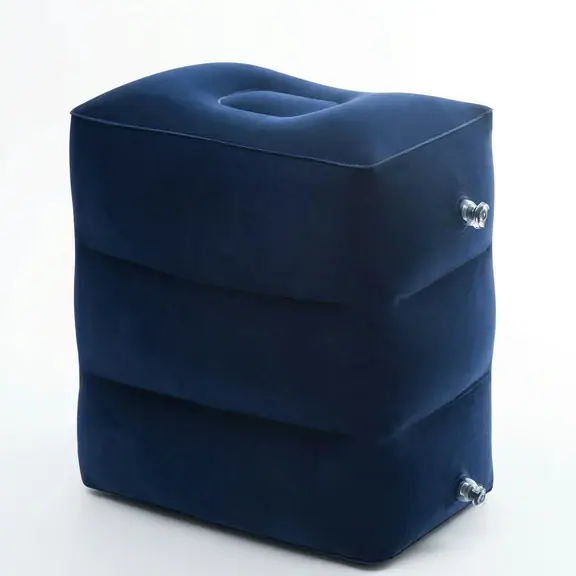
- The Inflatable Travel Footrest Pillow for Flights and Road Trips is 100% polyester, adjusts by how much you inflate it, and packs down small enough for a carry-on. Its care note warns against over-inflating it.
Neither listing says whether it has a quick-release valve. On an airline with rules like these, check with the airline before you fly, or keep the footrest for trains and road trips.
Stay warm
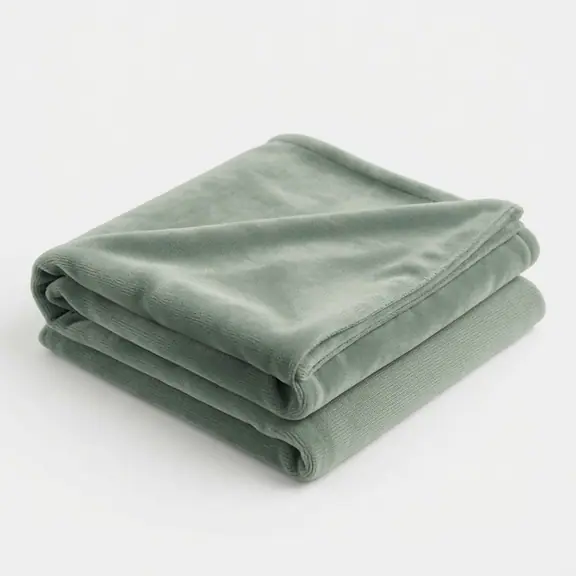
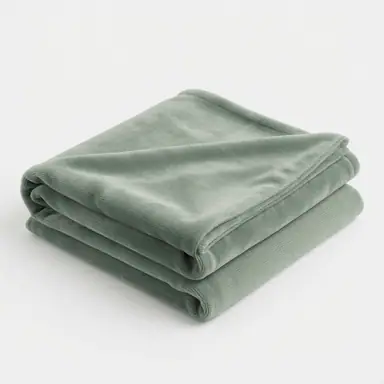
Cabins can get cold on night flights, and a layer of your own is more reliable than hoping for a blanket. The Plush Velvet Lap Blanket for Travel is 45 × 75 cm, so it is a lap blanket rather than a full throw: enough for your lap, small enough to fold into a tote. It is soft polyester and machine washes on a gentle cycle.
What to drink
The CDC's advice on jet lag is to stay hydrated and to keep alcohol and caffeine down. Its reason for alcohol is worth knowing: it can help you fall asleep sooner, but it tends to make the sleep more broken. The NHS gives similar advice for long journeys: drink plenty of water and avoid alcohol. To be fair to the evidence, the CDC notes there is no direct proof that drinking water or skipping alcohol prevents blood clots, but it calls staying hydrated reasonable and unlikely to do harm.
For sleeping tablets, the CDC's advice is to avoid antihistamines and sedatives with long half-lives, because they can worsen impairment and raise the risk of falls. If you are thinking about taking anything to sleep on a plane, ask your doctor or pharmacist first.
Get up anyway
This is the part that is easy to sleep through. Sitting still for a long time is a risk factor for DVT, a blood clot in a deep vein, usually in the leg. The NHS lists a long journey, of more than four hours, among the things that make DVT more likely. The CDC says the risk from air travel appears low in general, and that for flights under four hours it is negligible, but it rises with the length of the journey and with other risk factors.
On a journey of four hours or more, the NHS advises walking around when possible, wearing loose clothing, drinking plenty of water and avoiding alcohol. The CDC calls frequent walking and calf exercises reasonable for long-distance travellers.
- Walk around the cabin when you can, about every hour
- Flex and stretch your calves in your seat
- Wear loose clothing
- Drink plenty of water and avoid alcohol
If one leg becomes painful and swollen, especially in the calf or thigh, in the days or weeks after a long flight, get medical help as soon as possible. The NHS lists throbbing pain and swelling in one leg as symptoms of DVT. If that comes with shortness of breath or chest pain, call 999 or your local emergency number.
A long-haul sleep kit
- A travel pillow you have tried on at home
- An eye mask and earplugs
- A warm layer or a lap blanket
- A footrest, if your airline allows it
- Loose clothes and slip-on shoes
- A water bottle to fill after security
- An alarm on your watch or phone to get up and walk
Sources
About this guide. The rules, safety and health points follow the sources above. They are general information, not advice for your situation, and airlines can set stricter rules of their own, so check with yours before you fly. What we say about our own products comes from their product pages. We sell some of the things mentioned here.